
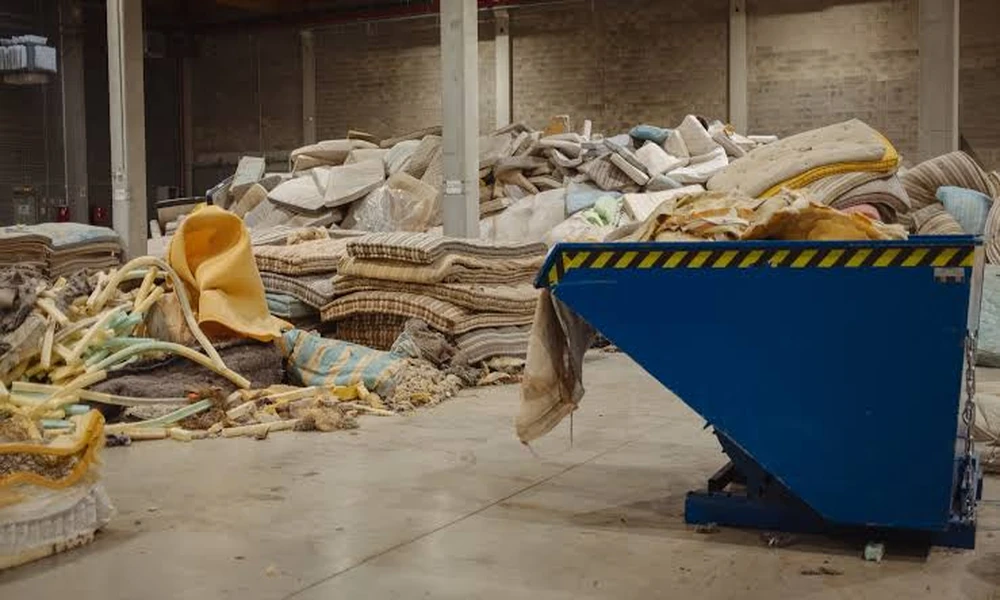
A mountain of discarded mattresses sits beneath the surface of every landfill and city, quietly taking up space for decades. Yet, recycling these bulky items is often dismissed as impractical or costly. It is time to question the myths and explore how innovative solutions are reshaping mattress recycling, turning a waste headache into a sustainability win.
Myth 1: Mattress Recycling Is Too Costly to Be Viable
Cost is the most persistent barrier cited by municipalities and manufacturers considering mattress recycling. Processing, labor, and transport all add up, but the economics are changing fast. Modern facilities leverage automation and optimized workflows to extract value from every mattress. Instead of relying solely on landfill dumping fees, recycling programs can generate revenue from materials such as metal springs and polyurethane foam.
Advancements in machinery and logistics have trimmed operational costs. By investing in conveyor-based systems and volume-based collection, recyclers can process more units per hour and lower costs per item. One Canadian company, for example, has recycled over four million mattresses and demonstrated that scaling up does not require runaway budgets. Their model shows that partnerships with local governments and steady supply streams make mattress recycling not just possible, but profitable.
Myth 2: Mattress Components Are Impossible to Separate Efficiently
Mattresses may look like single, stubborn units, but they are built from a mix of metals, fabrics, foams, and wood. Dismantling them by hand is time-consuming, but technology has changed the game. Modern recycling lines use industrial cutters, magnets, and air classifiers to break down and sort materials quickly.
Still, logistics can make or break efficiency. Coordinating the flow from collection, transport, sorting, and processing requires streamlined operations. Regional hubs, strategic truck routes, and flexible machinery now let facilities efficiently process diverse mattress types, reducing bottlenecks and manual labor.
Myth 3: There’s No Demand for Recycled Mattress Materials
What happens to the materials once a mattress is dismantled? The misconception is that recycled foam, steel, and textiles have little market value. In reality, demand is growing. Recovered steel is melted down for reuse in manufacturing, while foam and fabric find new life in carpet underlay, insulation, and even automotive products.
Partnerships with construction, manufacturing, and textile companies create reliable outlets for these materials. Environmental regulations and consumer demand for greener products are only boosting the trend. Incentives for using recycled content help close the loop, making recycling not only viable but desirable.
Myth 4: Scaling Recycling Infrastructure Requires Massive Land and Energy
Landfill footprints are massive, especially for items as bulky as mattresses. By contrast, modern recycling plants can be surprisingly compact. New layouts squeeze more processing power into less space using vertical storage and efficient material flow.
Energy use is another concern, but best-in-class facilities are making strides by harnessing solar power, capturing heat, and reusing energy from processing equipment. These innovations cut operating costs and emissions, lowering the environmental impact of scaling up.
Myth 5: Consumer Participation in Mattress Recycling Is Minimal
Recycling only works if people participate. Critics say consumers lack awareness or motivation. In response, cities and companies are rolling out robust public education campaigns that highlight the environmental impact and ease of mattress recycling. Convenient curbside collection, retailer take-back programs, and clear instructions remove barriers.
In places like Quebec, Ontario, and Montreal, participation has soared thanks to well-publicized programs, making these regions leaders in mattress recycling. Local success stories demonstrate how community engagement and convenience drive participation rates far higher than skeptics expect.
Myth 6: Mattress Recycling Cannot Compete with Landfilling on Speed and Volume
Landfills can swallow thousands of mattresses overnight, but recycling is catching up. Investment in high-capacity machinery, worker training, and logistics has slashed processing times. Facilities now routinely process hundreds of mattresses per day without sacrificing quality or efficiency.
With the right systems in place, recycling can match landfill speed and even surpass it in some cases. The key is continuous process improvement, leaning into automation, data tracking, and workforce development.
Proven Solutions and Future Directions
Scaling up mattress recycling comes down to policy, technology, and leadership. Policy frameworks in Canada and elsewhere have mandated producer responsibility, providing steady supply and funding for recycling programs. Technology continues to evolve, with smart sorting, robotics, and digital tracking pushing the boundaries of efficiency.
One standout example is Recyc-Matelas mattress recycling, which has pioneered sustainable mattress recycling in Canada. Their approach combines innovation with community partnerships, proving that large-scale recycling is both achievable and impactful.
The challenge of mattress disposal is far from unsolvable. By busting persistent myths and embracing new solutions, cities and companies can transform mattress recycling from a niche service into a mainstream environmental success.