
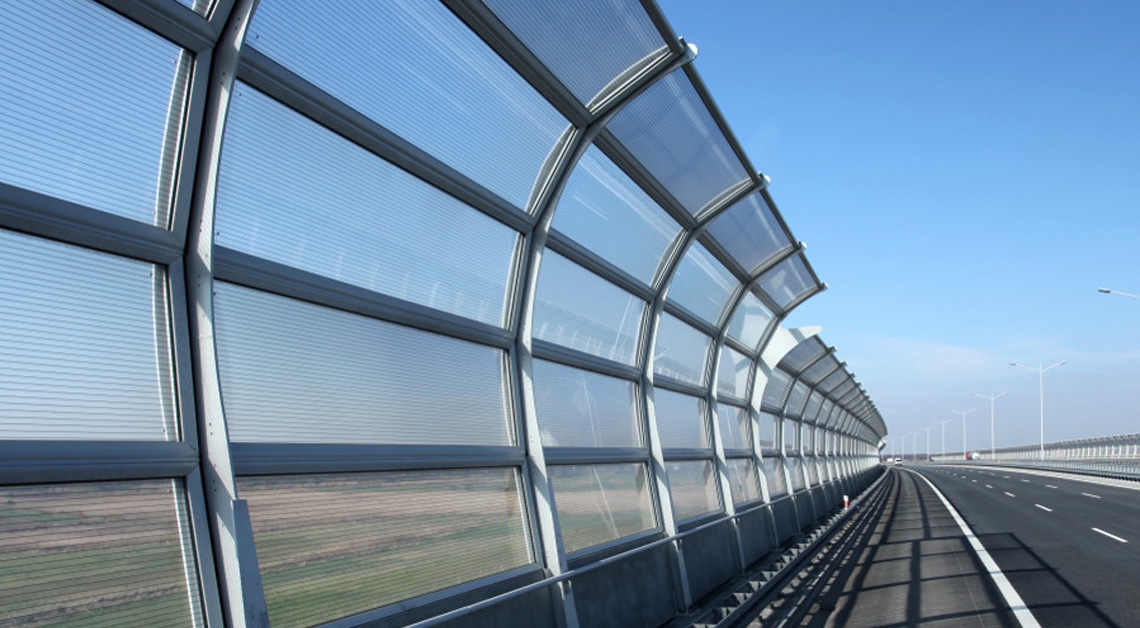
Singapore is one of the most densely built cities in the world. Space is limited, infrastructure is layered, and residential, commercial, and transport zones often sit side by side. This level of urban density brings efficiency, but it also creates a constant challenge: managing environmental noise in tightly packed areas.
Noise control in this context is not a single-solution problem. It requires a combination of engineering, planning, and material selection that adapts to extremely close proximity between sources of sound and sensitive receivers like homes, schools, and hospitals.
Why density changes everything in noise control.
In low-density environments, noise has room to dissipate. Distance alone can reduce impact significantly. In Singapore’s urban landscape, that buffer almost disappears.
Roads run alongside residential blocks, construction sites operate near active neighbourhoods, and elevated transport systems pass close to buildings. This means sound has very little space to weaken before it reaches people.
That is why solutions like a sound barrier in Singapore are not optional in many cases. They are an essential part of infrastructure design, particularly along expressways, rail corridors, and large-scale construction projects.
Space constraints force smarter acoustic design.
One of the biggest challenges in Singapore is that there is rarely enough space for traditional wide-buffer solutions. In other countries, noise mitigation might rely on distance, earth berms, or large green zones. In Singapore, those options are often limited.
Instead, engineers rely on vertical solutions such as walls, panels, and modular acoustic systems. A well-designed noise barrier must perform effectively within a narrow footprint while still meeting strict performance standards.
This often leads to taller, more engineered structures rather than wide, landscape-based buffers.
Multi-layered environments require multi-layered solutions.
Noise in dense cities is rarely one-dimensional. A single location may experience road traffic, construction activity, HVAC systems, and rail movement all at once.
Because of this, acoustic solutions must be designed to address different frequencies and transmission paths. A barrier that performs well for high-frequency noise may not be as effective against low-frequency vibration from heavy vehicles or trains.
This is why modern systems used as a sound barrier often combine multiple materials and structural layers. These may include dense core panels, absorptive surfaces, and reflective outer layers to manage different types of sound energy.
Vertical living increases sensitivity to noise.
High-rise living is a defining feature of Singapore’s urban environment. This adds another layer of complexity to noise control.
Sound does not just travel horizontally at ground level. It reflects off surfaces and travels upward, reaching residential units at multiple elevations. This means noise mitigation cannot focus only on street level.
A properly designed noise barrier must account for line-of-sight exposure from different building heights. In some cases, this results in tiered barrier systems or elevated acoustic screens that extend coverage vertically rather than just horizontally.
Construction activity is a constant noise source.
Singapore’s ongoing development means construction noise is a long-term factor rather than a temporary disruption. With frequent redevelopment and infrastructure upgrades, many residential areas are exposed to construction activity over extended periods.
In these situations, temporary acoustic measures become critical. Portable barriers, modular fencing, and site enclosures are often used to reduce impact on surrounding communities.
A temporary sound barrier used for construction must balance effectiveness with flexibility. It needs to be easy to install, reposition, and remove while still meeting regulatory noise limits.
Strict regulations shape design expectations.
Singapore is known for its structured approach to environmental management, including noise control. Regulations set clear expectations for permissible noise levels, especially near residential zones and during construction activity.
Because of this, acoustic solutions are not just recommended; they are often required as part of project approval.
A compliant noise barrier must therefore be designed with both performance and documentation in mind. Testing, certification, and material specifications all play a role in ensuring approval and avoiding project delays.
Material selection becomes more critical in tight environments.
In dense urban settings, even small differences in material performance can have noticeable effects. Reflective surfaces can redirect noise into unintended areas, while absorptive materials can help reduce overall sound energy.
The choice of material in a sound barrier is often influenced by durability as well. High humidity, heavy rainfall, and constant UV exposure mean materials must maintain performance over time without degradation.
This makes composite panels and treated surfaces more common in long-term installations.
Integration with urban design and aesthetics.
Noise control in Singapore is not purely technical. Visual integration with the urban environment is also important.
Barriers are often designed to blend with surrounding architecture or incorporate greenery and aesthetic finishes. This helps reduce visual impact while still maintaining acoustic effectiveness.
In many cases, a noise barrier is expected to perform two roles at once: functional noise reduction and visual harmony with the surrounding space.
Final Thoughts
Urban density in Singapore fundamentally changes how noise control is approached. There is less space to rely on natural separation, which means engineered solutions must do more of the heavy lifting.
Whether through permanent infrastructure or temporary site measures, effective acoustic planning is essential to maintaining liveable conditions in such a tightly built environment. In this context, solutions like sound barriers are not just technical additions but core components of urban design strategy.